
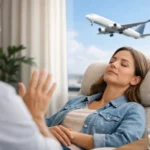
A flight can begin long before boarding. It may start when you book the ticket, picture the airport, or hear a low rumble overhead. If that familiar wave of tension has kept you from visiting people you love, pursuing an opportunity, or taking a needed break, hypnosis for fear of flying may offer a calmer way to prepare. The goal is not to force yourself to feel fearless. It is to understand the pattern beneath the fear and build a steadier response you can carry with you.
For many people, the hardest part is not the flight itself. It is the anticipation: restless nights before departure, repeated what-if thoughts, a tight chest in the terminal, or the urge to cancel. These reactions can feel deeply personal, even when you know logically that flying is a common form of travel. That gap between what you know and what your body does is where individualized subconscious work can be useful.
What fear of flying can feel like
Fear of flying is not one single experience. One traveler may feel uneasy during takeoff. Another may be comfortable in the air but become tense at the thought of turbulence. For someone else, the distress centers on being far from home, sitting in a confined space, or feeling unable to leave when they want to.
There may also be a past moment connected to the fear. Perhaps you experienced a rough flight, heard alarming stories growing up, or went through a stressful period that became linked with travel. Sometimes no clear event stands out. The mind and body can still learn to treat a situation as threatening after enough worry, vivid imagination, or repeated avoidance.
Avoidance can bring short-term relief, which is understandable. Yet it can also make the next trip feel even bigger. A supportive process makes room for that reality without judgment. You do not need to shame yourself into getting on a plane. You can begin by becoming curious about what your system is trying to protect you from.
How hypnosis for fear of flying works
Hypnosis is a focused, relaxed state in which you remain aware and in control. It is not sleep, mind control, or a performance where someone makes you do something against your values. In a private hypnotherapy session, a Certified Hypnotherapist guides you into a calm, attentive state and uses personalized suggestions, imagery, and conversation to support the changes you want to make.
With hypnosis for fear of flying, the work may focus on the thoughts, expectations, emotional associations, and protective habits that fuel your anxiety around travel. Rather than simply telling yourself to “calm down,” you explore what happens internally when you imagine a flight. You may identify a limiting belief such as, “I cannot handle this feeling,” or “If I am not in control, I am not safe.” From there, the process can support a more grounded inner response.
This is not about convincing you that every flight will feel pleasant or that turbulence will never bother you. It is about helping you practice a different relationship with discomfort. You may learn to notice a surge of fear, settle your attention, and remind yourself that a feeling can rise and pass without requiring immediate escape.
The approach should be personal. Someone who feels tense only during takeoff may need something different from a person who has avoided air travel for years. A thoughtful intake allows the session to address your specific experiences instead of relying on a generic relaxation script.
The value of working beneath the surface
A fear response often moves faster than conscious reasoning. You can read safety statistics, talk with a reassuring friend, and still feel your hands shake when the cabin door closes. Information can be helpful, but it does not always change the emotional pattern on its own.
Hypnotherapy can create space to rehearse a new internal experience. In a relaxed state, you might imagine moving through the airport with more ease, hearing an announcement without spiraling into what-if thoughts, or feeling the plane begin to climb while returning your attention to your breath and body. Repetition matters. The mind often responds well to practicing a calmer pathway before the real situation arrives.
For some people, the deeper benefit is recognizing that the fear has become tied to broader themes: pressure to stay in control, difficulty trusting their ability to cope, or an old habit of expecting the worst. Addressing those patterns with compassion can support change that reaches beyond one upcoming trip.
What a personalized process may include
At Mikki Hypnotherapy, the process begins with an extended two-hour Root Release session. This allows time to discuss your travel concerns, your goals, the situations that activate the strongest response, and any relevant emotional patterns you are ready to explore. There is no need to have the perfect explanation for your fear before you begin.
From there, continued sessions can reinforce the shifts you are building. A structured package may include guided hypnosis, practical coaching, calming imagery, and personalized tools for the days leading up to travel. The purpose is to give your mind and body repeated opportunities to choose a response that feels more supportive.
Virtual sessions can be a practical option when travel itself feels like a barrier. HIPAA-compliant virtual hypnotherapy sessions offer privacy and flexibility for adults throughout the United States where permitted. Private in-person sessions are also available in Port Orange for clients who prefer to meet face to face.
Progress is individual. Some people are preparing for one scheduled flight and want focused support around that event. Others want more time to work with a long-standing pattern of avoidance and self-doubt. A respectful practitioner will help you choose a pace that feels manageable rather than pushing you toward a deadline that does not feel right.
Supporting yourself before travel day
Hypnotherapy is most helpful when it becomes part of a broader, realistic preparation plan. You do not have to make the entire trip feel effortless. Instead, decide what would help you feel more supported at each stage, from packing to arriving at your destination.
Give yourself extra time at the airport so you are not adding rushed logistics to an already sensitive moment. Choose grounding cues you can use quietly, such as placing both feet on the floor, lengthening your exhale, or naming a few neutral details you can see around you. If you have a recording or practice created during your sessions, use it consistently in the days before you leave, not only when your fear is at its highest.
It can also help to replace a vague goal like “I cannot be anxious” with something more compassionate and specific: “I can feel nervous and still move through the next step.” This kind of language does not deny your experience. It gives you a way to meet it with more confidence.
When additional support is appropriate
Hypnotherapy is supportive care for personal growth, relaxation, mindset, and emotional resilience. It does not replace care from a licensed medical or mental-health professional. If your fear is accompanied by severe distress, safety concerns, or symptoms that affect your ability to function, consider speaking with an appropriate licensed provider as well.
You are always in charge of your choices. A responsible hypnotherapy experience includes informed consent, clear expectations, and respect for your boundaries. You can ask questions, pause, or decide that a particular approach does not feel right for you.
A flight may still bring moments of uncertainty. But uncertainty does not have to make every decision for you. With patient, personalized support, you can release what is holding you back and make room for travel that feels more possible, more self-directed, and more aligned with the life you want to live.
